


The future of farming is evolving rapidly, and Dyson is once again pushing the boundaries of innovation. Known globally for revolutionizing household technology, Dyson has now entered the agricultural sector with an ambitious and forward-thinking project: robotic rotating farms designed specifically for strawberry cultivation in the UK. This groundbreaking initiative demonstrates how advanced technology can address modern farming challenges while promoting sustainability and efficiency.
A Bold Move from Engineering to Agriculture
Dyson’s venture into agriculture is not a random experiment—it is a strategic application of engineering expertise to real-world food production issues. Traditional strawberry farming often faces challenges such as labor shortages, inconsistent yields, and vulnerability to changing weather conditions. Dyson’s robotic rotating farming system aims to tackle these issues head-on by creating a controlled, technology-driven growing environment.
How Robotic Rotating Farms Work
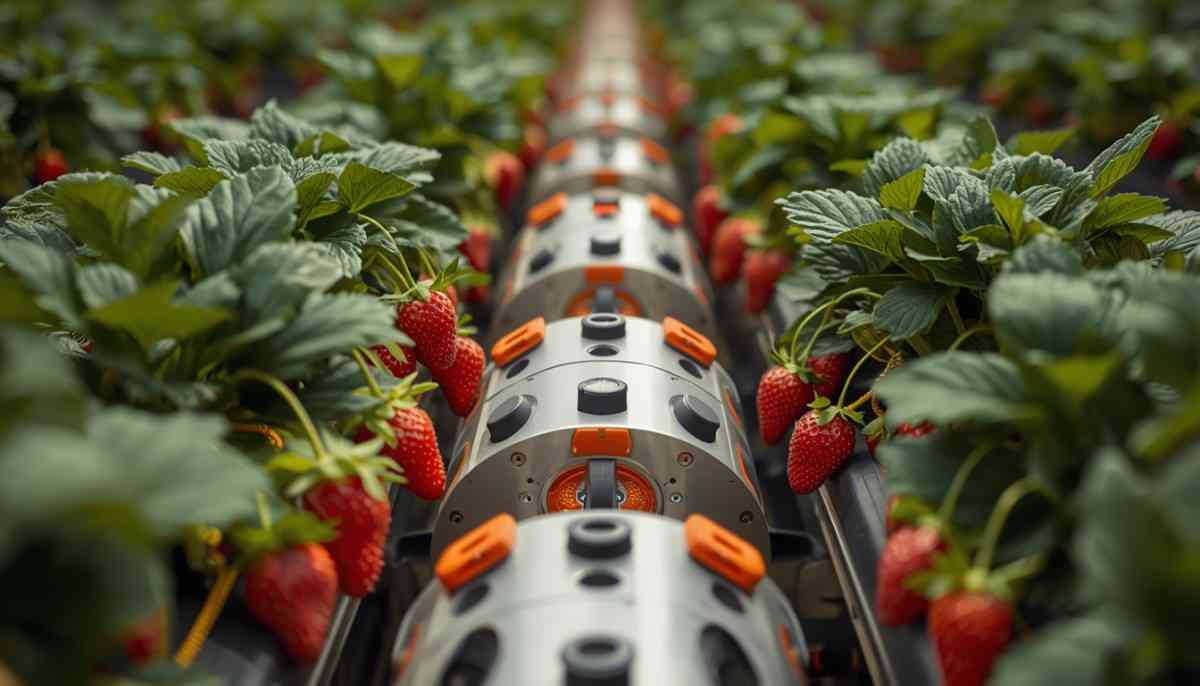
The core concept behind Dyson’s rotating farms lies in automation and precision. Strawberries are grown in vertically arranged structures that rotate slowly, ensuring each plant receives optimal exposure to light, air, and nutrients. Advanced robotics handle tasks such as monitoring plant health, adjusting growth conditions, and assisting with harvesting.
This rotation-based system allows for:
-
Uniform growth and higher-quality fruit
-
Reduced reliance on manual labor
-
More efficient use of space
-
Improved control over pests and diseases
Sustainability at the Heart of Innovation
One of the most impressive aspects of Dyson’s agricultural initiative is its strong focus on sustainability. The robotic farms are designed to minimize water usage, reduce chemical inputs, and optimize energy efficiency. By growing strawberries closer to consumers within the UK, the system also helps lower carbon emissions associated with long-distance food transportation.
As global food demand continues to rise, solutions like Dyson’s rotating farms highlight how technology can support sustainable farming practices without compromising productivity.
Addressing Global Food Production Challenges
Climate change, population growth, and shrinking agricultural land are placing immense pressure on food systems worldwide. Dyson’s robotic farming approach offers a glimpse into how innovation can help ensure food security. By combining automation, data-driven insights, and sustainable design, these farms represent a scalable model for future agriculture.
The Future of Tech-Driven Farming
Dyson’s entry into agricultural robotics signals a larger shift in how food may be grown in the coming decades. While strawberries are the initial focus, the underlying technology has the potential to expand to other crops. This could pave the way for smarter farms that are resilient, eco-friendly, and capable of meeting global demand.
Conclusion
Dyson’s robotic rotating farms for strawberry cultivation mark an exciting milestone in the intersection of technology and agriculture. This initiative not only enhances efficiency and sustainability but also sets a powerful example of how innovation can shape the future of food production. As challenges around farming continue to grow, forward-thinking solutions like this may become essential in building a more sustainable world.