

Introduction
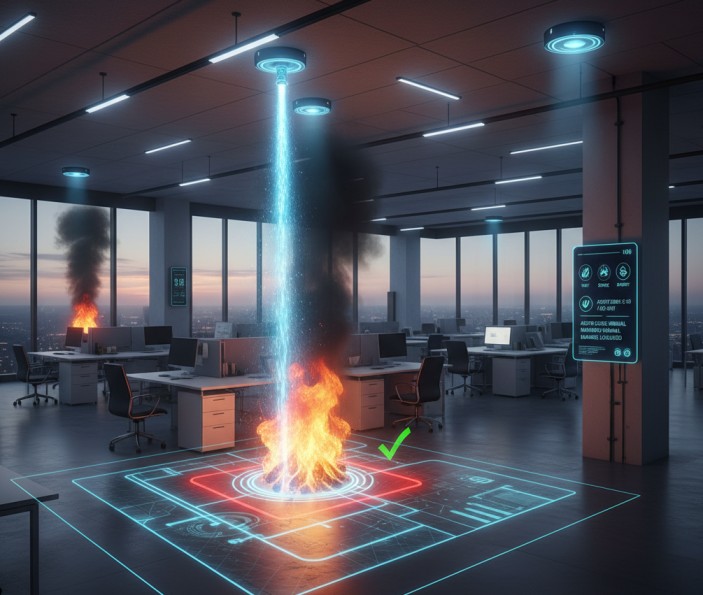
Exciting advancements in fire safety technology are here! With AI-powered fire safety technology, our approach to detecting and managing fires is evolving rapidly. These intelligent systems use advanced sensors to identify heat, smoke, and subtle air quality changes — activating sprinklers only in the affected area.
This innovative system not only saves lives but also reduces unnecessary water damage, making homes and workplaces safer and more efficient.
How AI is Changing Fire Detection
Traditional fire alarms rely on basic smoke or heat sensors that trigger all sprinklers simultaneously. While effective, this method often results in false alarms and excessive water damage.
In contrast, modern AI-based systems analyze environmental data using machine learning and IoT connectivity. They can tell the difference between harmless smoke — like cooking fumes — and actual fire threats.
When a real fire is detected, the system instantly activates sprinklers in that specific zone, preventing the spread of flames while conserving water and minimizing damage.
🔍 Example: In a commercial building, AI sensors can detect rising heat levels in one section and contain the threat without soaking unaffected areas.
Key Benefits of AI-Powered Fire Safety Systems
🔥 1. Faster and Smarter Detection
AI algorithms process heat and smoke data in milliseconds, enabling immediate response before a fire spreads.
💧 2. Water Conservation
Only sprinklers in affected zones activate, saving water and energy while reducing cleanup costs.
🧠 3. Reduced False Alarms
Smart sensors analyze multiple environmental factors to avoid unnecessary triggers, making alerts more reliable.
🏢 4. Lower Maintenance and Repair Costs
By preventing extensive water exposure, AI-powered fire safety technology reduces long-term repair expenses.
🌍 5. Eco-Friendly and Sustainable
Smarter detection means less waste, efficient energy use, and a smaller environmental footprint.
Real-World Applications
AI-powered fire safety systems are being implemented in:
-
🏠 Smart Homes – Integrated with home automation systems for real-time protection.
-
🏢 Commercial Buildings – Ensuring safety while minimizing business downtime.
-
🏭 Industrial Facilities – Managing high-risk zones with predictive detection.
-
🏥 Hospitals and Airports – Providing precision safety where every second counts.
Why It’s Time to Embrace AI Fire Safety
Adopting AI-powered fire safety technology is more than a smart choice — it’s a lifesaving innovation. With predictive analysis, remote monitoring, and instant alerts, these systems offer peace of mind 24/7.
Whether it’s for a home, office, or industrial plant, AI-driven fire safety ensures that every second counts — and every drop of water is used wisely.
Frequently Asked Questions (FAQ)
1. How does AI-powered fire detection work?
These systems collect real-time data from heat, smoke, and air-quality sensors. AI then interprets the data to confirm if there’s a real fire before activating sprinklers.
2. Can it be integrated into existing systems?
Yes, most AI systems are compatible with traditional fire alarm frameworks and can be upgraded without full replacements.
3. Is AI fire safety expensive to install?
The initial cost is slightly higher, but long-term savings from reduced water use, maintenance, and property damage make it highly cost-effective.
4. Do AI fire safety systems work without the internet?
Many use edge AI technology, meaning they can operate locally and don’t rely solely on cloud connections.
Conclusion
AI-powered fire safety technology is transforming the way we protect our spaces. By combining smart sensors, real-time analysis, and targeted sprinkler activation, these systems deliver precision, efficiency, and sustainability in fire protection.
As technology advances, embracing AI fire safety means embracing a future of smarter, safer living — where innovation truly protects what matters most.